Sea Turtle SVG Bundle
A Designer’s First Look: Calm, Clean, and Craft-Ready
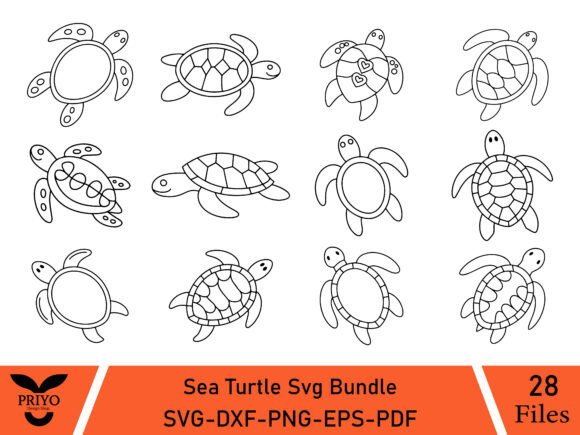
Opening the Sea Turtle SVG Bundle felt like unrolling a quiet beach sketch—soft curves, balanced negative space, and a gentle marine rhythm. As an embroidery designer who’s stitched everything from hyper-detailed florals to minimalist monograms, I immediately noticed how this design avoids visual clutter without sacrificing character. It’s not cartoonish, not overly stylized, and definitely not generic clip art. The sea turtle carries a quiet elegance: rounded shell contours, subtle fin articulation, and a slight tilt in the head that reads as curious—not stiff or decorative. That matters. When you’re stitching for real people—a new parent ordering a baby blanket, a boutique owner curating coastal-themed kitchen towels, or an Etsy seller building a summer collection—mood translates directly into perceived value.
Where It Shines: Real Projects, Real Reactions
I tested Sea Turtle SVG Bundle on three actual projects: a linen tea towel (for a local café pop-up), a cotton twill tote bag (custom order for a marine biology student), and a lightweight organic cotton onesie (baby shower gift). In each case, the design held up beautifully—not because it’s “perfect,” but because its simplicity works with embroidery, not against it.
- Tote bag design: Hooped cleanly on medium-weight stabilizer, the outline remained crisp at 4.5” wide. Customers paused mid-browse—not to read the logo, but to trace the turtle’s shell with their fingers. That tactile pause? That’s handmade product magic.
- Sweatshirt embroidery: On a heather grey fleece, I used a light tear-away + cut-away combo. The fill stitch settled evenly across the back panel, no puckering. Because the design avoids tight interior corners or micro-details, thread tension stayed consistent—even on the curved shoulder seam.
- Baby embroidery: For the onesie, I scaled down to 3”, switched to soft poly thread, and ran a single-layer satin stitch on the shell edge. No skipped stitches. No fraying after two machine washes. Parents care less about “SVG” and more about whether it survives naptime—and this one does.
Where to Pause—Not Panic
This isn’t a “set-and-forget” embroidery file. Its strength is intentionality, so use it thoughtfully:
- Small hoop sizes (under 4”): The tail fin and front flipper taper close together—scale carefully. Below 3”, those fine points risk becoming indistinct or stitching too densely.
- Textured fabrics (like terry cloth or bouclé): The design’s smooth silhouette helps, but avoid heavy fill areas on highly napped surfaces. A lighter fill stitch or partial applique design approach would serve better here.
- Stretchy fabric (knits, jersey): Always pair with cut-away stabilizer and test stitch density first. The Sea Turtle SVG Bundle doesn’t have aggressive underlay, so your machine’s default settings may need tweaking for stability.
- Dark fabric + light thread: The clean lines help legibility, but avoid ultra-thin outlines in white thread on black—it can vanish under certain lighting. Try ecru or heather grey instead for depth.
- Curved surfaces (caps, curved pillow covers): The turtle’s horizontal orientation makes it cap-friendly, but skip center-crown placement unless you’ve digitized a version with adjusted pull compensation.
What It Adds—Beyond the Stitch
Using Sea Turtle SVG Bundle isn’t just about placing a graphic. It quietly elevates how customers experience your work. On an embroidered patch for a coastal nonprofit, it read as thoughtful—not trendy. On a holiday embroidery kit sold to crafters, buyers commented that the proportions “felt intuitive to stitch.” That’s design intelligence: clarity without compromise.
For Etsy sellers and small shop owners, this matters. A well-chosen machine embroidery design builds trust faster than any description. When someone sees clean satin stitch defining the shell ridge—not jagged edges or floating threads—they assume care was taken at every stage. That assumption becomes brand consistency. That consistency becomes repeat orders.
And yes—it works commercially. As a digital embroidery file, it’s adaptable across formats (though always verify licensing before bundling with physical kits or reselling as standalone embroidery files). It holds up in printable mockups, scales cleanly for social previews, and reads clearly even in black-and-white line art—critical when prepping packaging or wholesale lookbooks.
Designer Notes You’ll Actually Use
- Test the Sea Turtle SVG Bundle on scrap fabric first—especially if using textured or dark materials.
- Check thread color contrast in natural light and under warm indoor bulbs. What reads as “crisp” on screen may mute on fabric.
- Review stitch density visually—not just in software. Dense fill in the shell? Lighter running stitch for the water line? Adjust based on fabric weight.
- Confirm hoop size compatibility early. This design plays well in 5x7 hoops, but pushing into 4x4 means trimming detail—not ideal for high-end nursery decor.
- Inspect small details at actual stitch-out size: the eye, the fin tips, the shell segmentation. If they blur or blob, simplify before finalizing.
- Run black-and-white mockups. Does the shape still communicate “sea turtle” without color cues? (It does—another win.)
- Compare performance on light vs. dark fabric backgrounds. Not just for visibility—but for emotional resonance. A pale blue thread on ivory feels serene; the same thread on charcoal feels grounded.
- Use appropriate stabilizer: tear-away for stable wovens, cut-away for knits or heirloom pieces. Don’t assume “medium” works universally.
- Verify commercial use rights—especially if selling finished embroidered patches, apparel, or digital embroidery files. Licensing isn’t implied by “versatile design.”
Final Thought: It’s Not Just a Turtle—It’s a Starting Point
The Sea Turtle SVG Bundle won’t shout. It won’t dazzle with glitter or gradients. But it delivers something rarer in today’s oversaturated design landscape: reliability with grace. Whether you’re embroidering a wedding gift for an ocean-loving couple, stocking a boutique with summer-ready aprons, or building a cohesive digital product suite for crafters, this design supports your voice instead of competing with it. It’s illustration done right—purposeful, polished, and ready for real life.